
The Importance of HR Strategies in Modern Organizations
In today’s fast-changing business environment, having a clear HR strategy is no longer optional—it’s essential. Organizations that invest in structured HR planning are better equipped to align their workforce with business goals, drive growth, and adapt to evolving industry demands.
Driving Business Growth Through People
Employees are at the core of every organization. A well-executed HR strategy helps attract, develop, and retain talent, ultimately contributing to business growth.
By focusing on the right initiatives—such as workforce planning, performance management, and employee engagement—organizations can build a productive and motivated workforce that supports long-term success.
What Should Be Included in an HR Strategy Plan?
Singapore Context - Part 1In Singapore’s evolving workforce landscape, an effective HR strategy goes beyond internal planning, it must also align with national workforce priorities, regulatory requirements, and industry transformation efforts.
HR plays a critical role in supporting business transformation, workforce resilience, and fair employment practices.
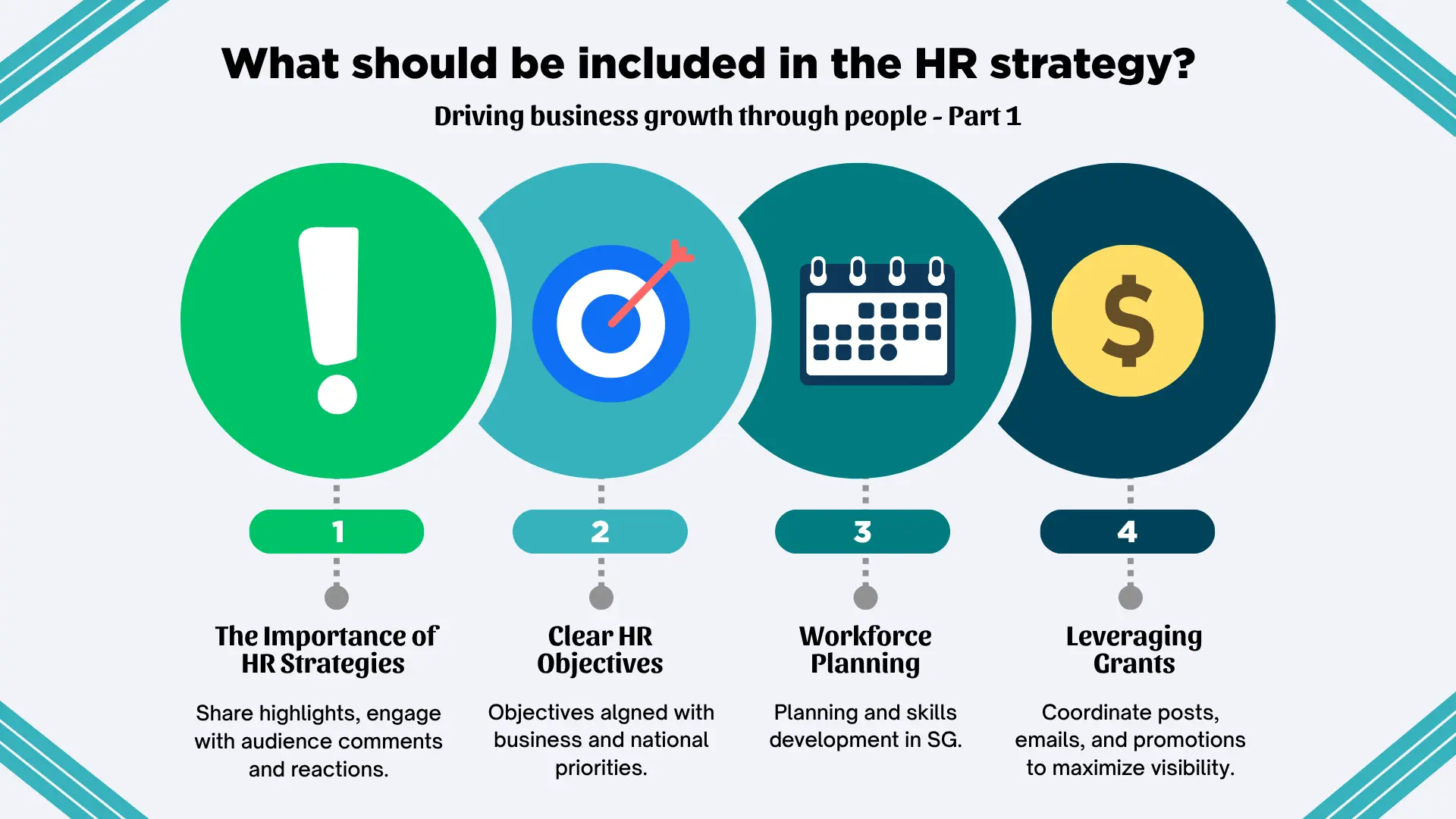
Here are the key components every HR strategy plan in Singapore should include:
Clear HR Objectives Aligned with Business and National Priorities
HR goals should not only support business outcomes but also reflect Singapore’s broader workforce direction such as productivity, skills development, and fair hiring practices. This alignment ensures that organisations remain competitive while contributing to a sustainable and inclusive workforce.
In recent years, Singapore has seen productivity gains driven in part by digital transformation across industries. At the same time, the workforce has evolved, with a growing proportion of Professionals, Managers, Executives, and Technicians (PMETs), reflecting a shift towards higher-skilled roles. Despite an ageing population, labour force participation has remained resilient, supported by policies and workplace practices that encourage continued employment and adaptability.
These developments are not driven by policy alone. HR plays a critical role in making them a reality. Through strategic workforce planning, skills development initiatives, and the adoption of digital tools, HR teams enable organisations to enhance productivity, support workforce transformation, and stay aligned with Singapore’s economic direction.
Workforce Planning and Skills Development in Singapore
Effective workforce planning is critical in Singapore, where policies aim to balance local and foreign talent while strengthening the local workforce. A strong HR strategy ensures organisations hire the right talent, retain them, and develop the skills needed to meet evolving business demands.
Good hiring plans go beyond recruitment, they include structured onboarding, clear role expectations, and early engagement initiatives to help employees become productive and feel valued during their first few months. This approach reduces turnover and ensures that new hires are “useful” quickly.
Equally important is supporting the development of Singaporean employees. HR strategies should create opportunities for upskilling and career progression, ensuring the local workforce remains competitive and integral to the organisation’s success.
Leveraging SkillsFuture and Government Grants
Singapore offers several initiatives to support workforce development. SkillsFuture provides employees with access to a wide range of approved training courses, helping them upskill or reskill. Funding covers up to 70% of course fees for most employees, and up to 90% for mid-career professionals aged 40 and above. (ssg.gov.sg)
Organisations can also tap into government grants to offset training and transformation costs, such as:
- SkillsFuture Enterprise Credit (SFEC) – up to S$10,000 to support employee training and business transformation.
- Workforce Development Grants – funding for job redesign and learning initiatives.
- Training allowances – helping employees attend courses without income disruption.
By integrating structured hiring, onboarding, and skills development with these national initiatives, HR teams can build a resilient, future-ready workforce. This approach not only improves productivity and engagement but also ensures organisations contribute to Singapore’s broader workforce development goals.
These initiatives make it more accessible and cost-effective for companies to invest in employee growth. By incorporating structured learning and leveraging available grants, organisations can build a future-ready workforce while managing training costs effectively.
Read Part 2: The Importance of HR Strategies in Modern Organisations →