
← Read Part 1: The Importance of HR Strategies in Modern Organisations
What Should Be Included in an HR Strategy Plan?
Singapore Context - Part 2Key HR Initiatives and Execution Plan
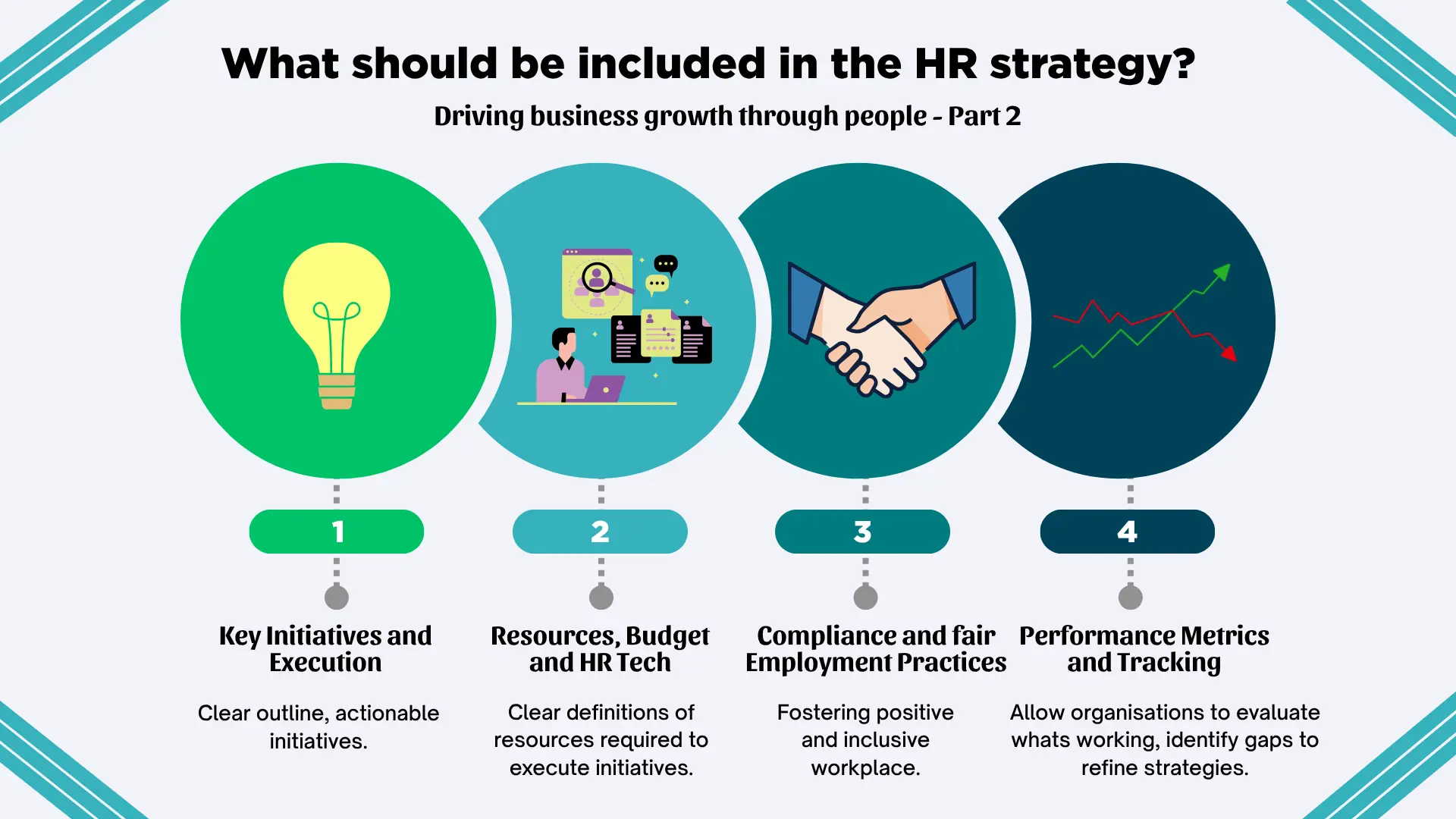
HR strategies should clearly outline actionable initiatives—such as performance management, employee engagement, or digital HR transformation.
In Singapore, there is a growing push towards digitalising HR processes and adopting technology to improve efficiency and workforce management.
Resources, Budget, and HR Technology
A strong HR strategy clearly defines the resources required to execute initiatives effectively, including manpower, budget, and tools. Proper planning ensures that investments are aligned with business priorities and deliver measurable value.
With the increasing adoption of digital HR solutions in Singapore, many organisations are turning to technology to streamline processes such as payroll, attendance tracking, and employee management. Beyond improving efficiency, digitalisation also enables better data visibility and workforce analytics.
This is especially important as HR is often viewed as a cost centre. By leveraging HR technology, organisations can gain deeper insights into workforce costs, productivity, and resource utilisation. These insights support more informed decision-making, allowing companies to optimise budget allocation, justify HR investments, and demonstrate the tangible impact of HR on business performance.
Ultimately, digitalising HR processes not only reduces administrative burden but also empowers HR teams to take on a more strategic, data-driven role within the organisation.
Compliance and Fair Employment Practices
In Singapore, HR strategies must align with regulations set by the Ministry of Manpower (MOM) and follow tripartite guidelines to ensure fair and responsible workforce management. This helps organisations remain compliant while fostering a positive and inclusive workplace.
For example, under the Fair Consideration Framework (FCF), employers are required to advertise job roles to local candidates before hiring foreign employees, ensuring fair access to opportunities for Singaporeans. In addition, the Tripartite Guidelines on Fair Employment Practices (TGFEP) require employers to adopt merit-based hiring and avoid discrimination based on age, gender, nationality, or other non-job-related factors.
By embedding these requirements into HR strategies, companies not only meet regulatory standards but also build trust, strengthen employer branding, and support a fair and inclusive workforce in Singapore.
Performance Metrics and Tracking
Tracking progress is essential for accountability and continuous improvement. HR teams should define key performance indicators (KPIs) to measure hiring success, employee performance, retention, and overall HR effectiveness. Clear metrics allow organisations to evaluate what is working, identify gaps and to refine their strategies over time.
In practice, many organisations track progress through a combination of HR dashboards, regular reporting cycles, and performance reviews. Common methods include monthly or quarterly KPI reviews, employee engagement surveys, and workforce analytics such as turnover rates, time-to-hire, and productivity metrics. These approaches provide a structured way to monitor outcomes and support data-driven decision-making.
To enhance tracking further, companies are increasingly adopting data visualisation tools and integrated HR systems that consolidate information across payroll, attendance, and performance. Solutions like PayAdvisorMobile®, for example, enable HR teams to access real-time reports and visual dashboards, making it easier to monitor workforce trends, track key metrics, and generate insights without relying on manual processes.
Looking ahead, organisations can do better by moving towards predictive analytics and more proactive tracking — for example, identifying early signs of employee turnover, skills gaps, or workforce inefficiencies before they impact the business. By combining clear KPIs with advanced analytics and digital tools, HR teams can shift from reactive reporting to a more strategic, forward-looking approach.
Bringing It All Together
In Singapore, HR strategies are not just about managing people—they are about enabling business transformation while aligning with national workforce goals.
By incorporating workforce planning, skills development, compliance, and digital transformation, organisations can build a strong, future-ready workforce that supports both business growth and the country’s evolving economy.